
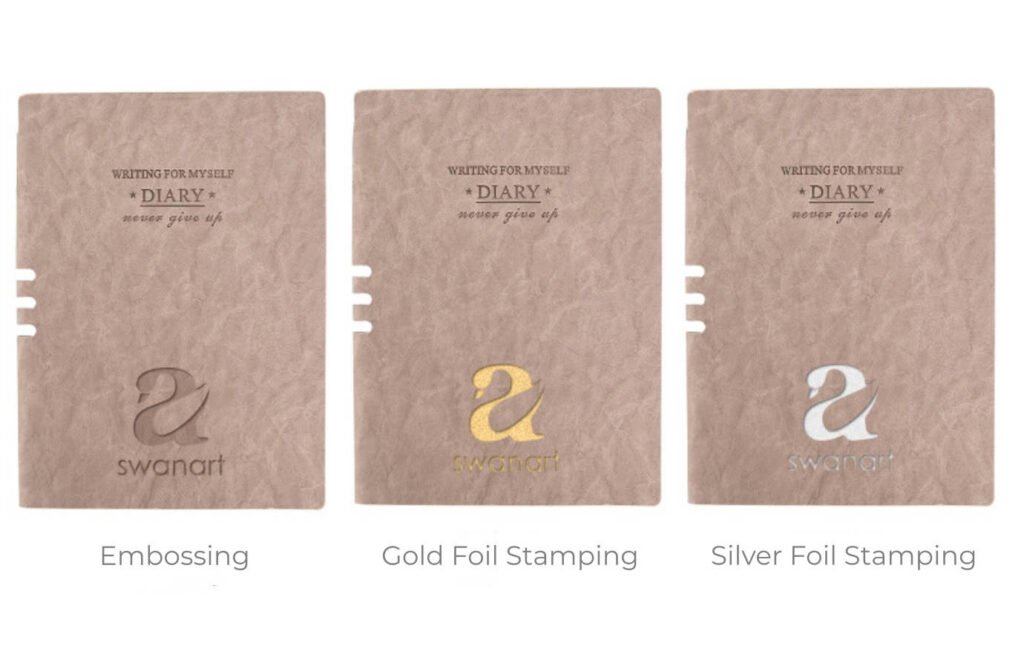
Choosing the right customization technique is key to transforming a standard notebook into a powerful brand statement. Each method offers a unique blend of visual appeal, tactile feel, and perceived value. This guide explores four popular processes: Gold Foil Stamping, Silver Foil Stamping, Embossing, and Screen Printing, to help you select the perfect finish for your branded notebooks.
Gold and Silver Foil Stamping
Foil stamping, often called hot stamping, uses heat and pressure to transfer a thin metallic foil (gold, silver, or other colors) onto the notebook cover.
Process & Feature: A heated metal die presses the foil onto the surface. This results in a smooth, flat finish with a reflective, shiny appearance that feels sleek to the touch.
Best Applications: This technique is ideal for achieving a luxurious and eye-catching look. It is a classic choice for corporate logos, awards, and gifts where a sense of established quality and prestige is desired . It works best on smooth materials like PU leather, genuine leather, and certain high-quality papers.
Embossing and Debossing
Embossing creates a raised (embossed) image, while debossing creates a recessed (debossed) image. This technique relies on pressure to physically alter the material’s surface, creating a three-dimensional effect without ink or foil.
Process & Feature: Using matched male (raised) and female (recessed) metal dies, the material is pressed to create a permanent raised or recessed design. The result is a tactile, textured logo that you can feel.
Best Applications: Embossing is perfect for conveying understated luxury, craftsmanship, and a premium tactile experience. It excels at creating a sophisticated and professional brand image through texture rather than color. “Blind” embossing (without foil) is particularly effective for a minimalist, elegant look.
Screen Printing
Screen printing is a versatile technique that pushes ink through a fine mesh stencil onto the product surface. It is known for creating vibrant, opaque layers of color.
Process & Feature Ink is forced through a screen containing your design onto the cover. This creates a durable, flat layer of ink that sits on the material’s surface. The finish can be matte or glossy, depending on the ink used.
Best Applications: This is a great choice for vibrant, solid-colored designs, large areas of color, or printing on dark-colored covers. It is highly durable and resistant to fading, making it suitable for notebooks that will see heavy use. It is also a cost-effective option for larger quantity orders.
How to Choose the Right Technique for Your Brand?
Your choice should align with the brand image you wish to project and practical considerations like budget and cover material.
- Define Your Brand’s Priority
For a bright, classic, and eye-catching logo that emphasizes visibility and luxury, Foil Stamping (Gold or Silver) is an excellent choice.
For a modern, sleek, and tech-oriented image, Silver Foil Stamping is often preferred.
For a classic, sophisticated, and tactile experience that conveys quality and craftsmanship, Embossing/Debossing is the superior option.
For vibrant, opaque colors, large graphics, or printing on dark covers economically, Screen Printing is ideal.
- Consider Your Cover Material
Smooth Leather/PU: Excellent for all techniques, especially foil stamping and embossing.
Textured or Fabric Materials: Embossing/debossing or screen printing may yield better results than foil stamping.
- Align with Your Budget and Volume
Foil stamping and embossing involve creating custom dies, which can increase initial setup costs.
Screen printing, while also requiring a stencil, is often more cost-effective for large runs.
SnowInk’s Philosophy
Empowering Creativity with Quality, Conveying Strength with Warmth.
SnowInk Printing aspires to accompany every moment of your reflection with meticulous craftsmanship, jointly witnessing the seeds of thought blossom and bear fruit.