
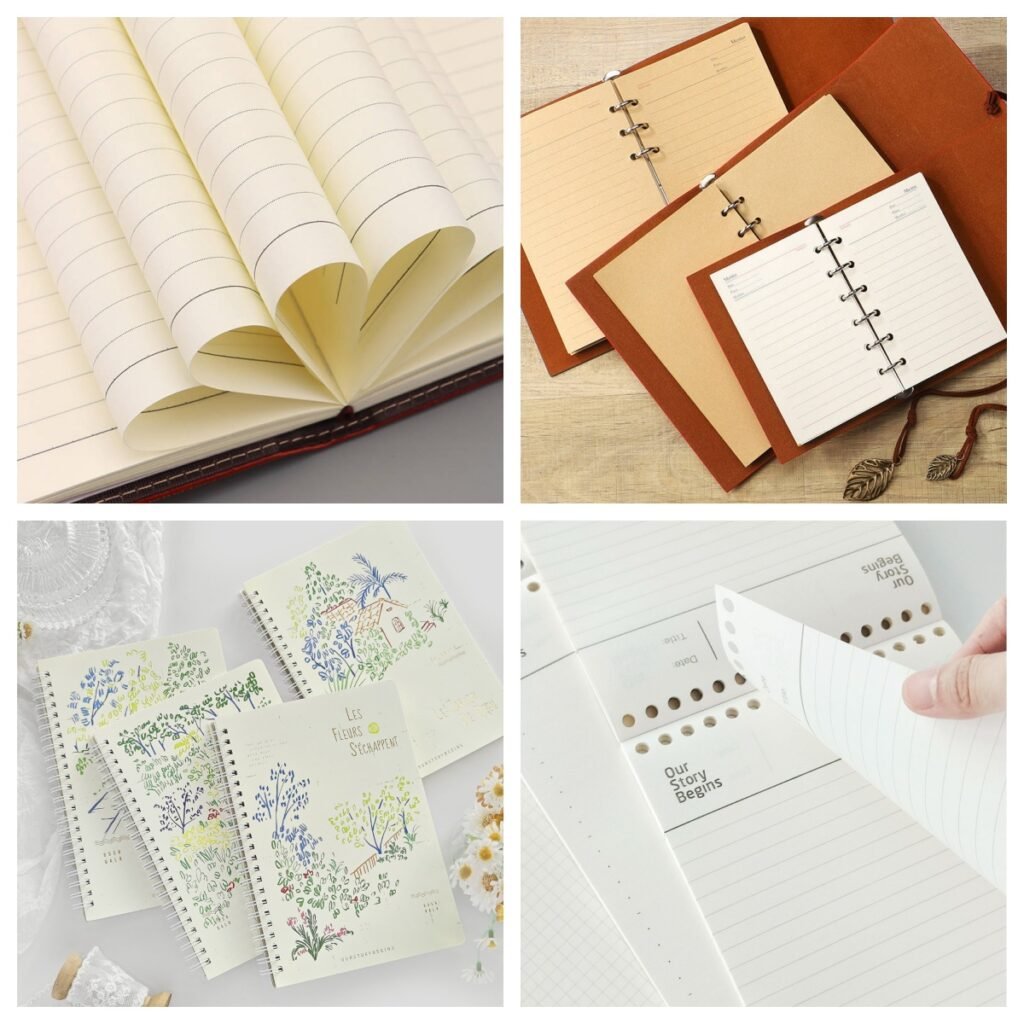
The binding of a notebook is more than just a technical detail—it defines how the notebook feels, functions, and endures over time. Whether you’re a student, professional, or creative, understanding the common binding methods can help you select the perfect notebook for your needs.
Thread Sewing Binding (Locked Stitch Binding)
This method involves sewing folded pages together with thread before attaching the cover, resulting in exceptional durability. Notebooks with thread-sewn binding lay completely flat when open, making them ideal for sketching, journaling, or writing comfortably. They are well-suited for thick, high-page-count notebooks (often exceeding 200 pages) and are commonly used for premium diaries, archival notebooks, or hardcover books. However, this process is time-consuming and generally more expensive.
Perfect Binding (Wireless Glue Binding)
In this approach, the pages are gathered and fixed to the spine using a strong adhesive (like EVA hot-melt glue) without stitching. It provides a clean, professional look and is cost-effective for mass production, often used for paperback books, workbooks, or catalogs. The drawback is that the spine does not flex easily, so the notebook may not lay perfectly flat, and with heavy use or age, pages might detach. It’s best for medium-thickness notebooks (around 50–300 pages) that won’t undergo daily rugged use.
Saddle-Stitch Binding
This simple, economical method uses metal staples punched through the spine fold of stacked sheets. It is lightweight, quick to produce, and allows the notebook to open relatively flat. However, it is only practical for thinner notebooks (usually under 100 pages or 64 pages), as thicker booklets may cause the staples to strain or rust over time. Saddle-stitch binding is often chosen for brochures, notepads, and event programs.
Spiral & Wire-O Binding
Spiral binding uses a continuous plastic or metal coil threaded through punched holes along the notebook’s edge. Wire-O binding employs a double-loop wire for a more refined look. Both allow the notebook to fold back on itself effortlessly, offering 360-degree lay-flat functionality—highly convenient for note-taking, sketching, or recipe books. While very practical, the coils can sometimes bend or snag, and the appearance may be less formal than other bindings.
Loose-Leaf Binding (Ring or Disc Mechanism)
Loose-leaf systems use rings, discs, or lever mechanisms to hold perforated pages, allowing you to add, remove, or rearrange sheets with ease. This is perfect for customizing notes, organizing project plans, or reusing the cover with new refills. Though highly flexible, the rings may weaken over time, and the overall look can be bulkier.
Making the Right Choice
When selecting a binding, consider the notebook’s purpose:
- For frequent, heavy use (e.g., journals, sketchbooks), thread-sewn binding offers superior durability and a flat opening.
- For cost-effective, sleek notebooks (e.g., workbooks, manuals), perfect binding works well if laying flat is not critical.
- For maximum flexibility and easy editing, loose-leaf or spiral binding is the most practical.
The right binding not only improves functionality but also extends the life of your notebook, making it a reliable tool for everyday creativity and organization.
SnowInk’s Philosophy
Empowering Creativity with Quality, Conveying Strength with Warmth.
SnowInk Printing aspires to accompany every moment of your reflection with meticulous craftsmanship, jointly witnessing the seeds of thought blossom and bear fruit.